PCOS Is Now PMOS — and It Changes Everything You Thought This Condition Was About
May 12, 2026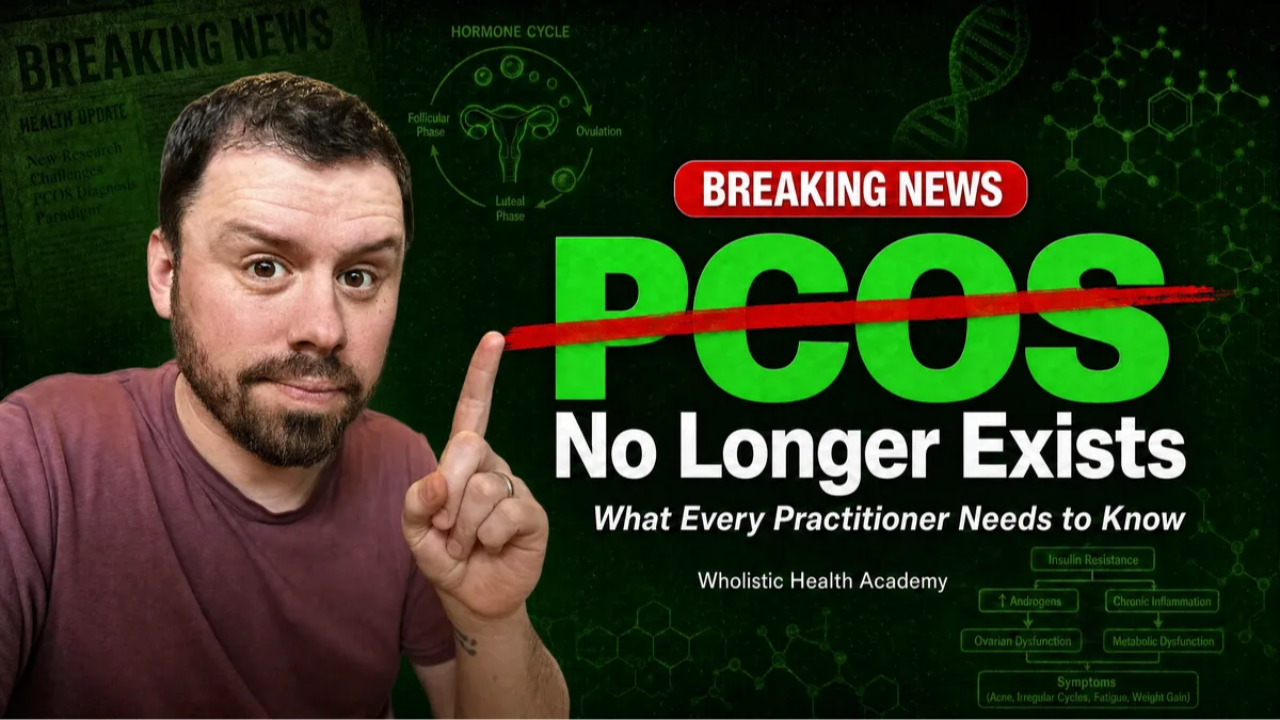
PCOS Is Now PMOS — and It Changes Everything You Thought This Condition Was About
Polycystic Ovary Syndrome Has Been Officially Renamed Polyendocrine Metabolic Ovarian Syndrome
As of May 12, 2026, Polycystic Ovary Syndrome (PCOS) has been officially renamed Polyendocrine Metabolic Ovarian Syndrome (PMOS). The name change — published today in The Lancet after a 14-year global consensus process involving over 14,000 patients and health professionals across 56 organizations — isn't cosmetic. It's a fundamental reframing of a condition that affects one in eight women worldwide, and it validates what functional practitioners have been teaching for years: this was never just about ovarian cysts.
Why the Name Had to Change
The term "polycystic ovary syndrome" was always a misnomer. The so-called "cysts" on ultrasound aren't pathological cysts at all — they're arrested follicles, a consequence of the hormonal disruption, not the cause. But the name anchored the condition to a single organ and a single imaging finding, and that framing had real consequences.
Up to 70% of affected individuals remained undiagnosed, in part because the name implied this was a gynecological problem. Practitioners outside of OB/GYN often didn't consider it in their differential. Patients were told they had "cysts on their ovaries" and given birth control — without anyone investigating the metabolic and endocrine dysfunction underneath. Research funding was siloed into reproductive medicine. And the name itself carried stigma, particularly in cultures where fertility defines a woman's value.
The renaming process concluded that three terms needed to appear in the new name: polyendocrine, metabolic, and ovarian. Each reflects a dimension of the condition's pathophysiology that the old name entirely obscured.
What "Polyendocrine" Acknowledges
PMOS isn't a single-hormone disorder. It involves multiple interacting endocrine abnormalities — insulin, androgens, neuroendocrine signaling, ovarian hormones, and adrenal output all converge. Hyperandrogenism is a defining feature, but it doesn't arise in isolation. Central neuroendocrine disturbances — including increased GnRH pulsatility driving LH elevation — amplify ovarian androgen production. Insulin resistance and compensatory hyperinsulinemia compound the picture by directly stimulating androgen secretion and disrupting steroidogenesis.
The "polyendocrine" designation captures what functional practitioners have long understood: you cannot assess this condition through a single hormone or a single gland. It requires evaluating the interplay between insulin, cortisol, androgens, thyroid function, and the hypothalamic-pituitary axis — as interconnected systems, not isolated lab values.
What "Metabolic" Finally Puts on the Table
This is the word that changes clinical practice. Insulin resistance is present in approximately 85% of individuals with PMOS — including 75% of lean women with the condition. That statistic alone should have reframed how practitioners approach this condition years ago. The metabolic features aren't secondary or incidental — they're foundational.
The Lancet publication makes this explicit: metabolic abnormalities underpin PMOS from genetic origins to clinical manifestations. Insulin resistance contributes to androgen excess, drives low-grade inflammation, disrupts adipokine signaling, and creates the metabolic environment in which virtually every other feature of the condition worsens. Obesity — particularly central adiposity — is increased in PMOS and exacerbates symptom severity. The downstream metabolic consequences include impaired glucose tolerance, gestational diabetes, type 2 diabetes, dyslipidemia, hypertension, metabolic dysfunction-associated steatotic liver disease, and cardiovascular disease.
The data on cardiovascular risk is striking: odds ratios for composite cardiovascular disease (1.68), myocardial infarction (2.50), and stroke (1.71) are all significantly elevated in women with PMOS compared to those without.
💡 Clinical Pearl
If 85% of individuals with PMOS have insulin resistance, then blood sugar and insulin assessment should be on every PMOS workup — not as a secondary consideration, but as the metabolic foundation. Fasting insulin, HOMA-IR, HbA1c, and TG/HDL ratio belong on the panel alongside reproductive hormones. The rename makes this clinically inescapable.
What "Ovarian" Preserves — and What It No Longer Implies
The term "ovarian" remains because ovarian dysfunction is a defining feature — genetically rooted, with disturbances in endocrine and paracrine function that extend across the lifespan. Disrupted folliculogenesis, accumulation of small antral follicles, elevated AMH, ovulatory dysfunction, and menstrual irregularity are real clinical features that deserve recognition in the name.
But the critical shift is what the name no longer says. It no longer says "cysts." It no longer implies that the primary pathology is structural ovarian disease. It no longer frames the condition as primarily gynecological. The ovary is one organ affected by a multisystem disorder — not the defining locus of the disease.
Why This Validates Pattern-Based Practice
For practitioners trained in pattern recognition, this rename isn't a surprise — it's a long-overdue acknowledgment. The functional approach to what was formerly called PCOS has always treated it as a metabolic and endocrine pattern, not just a reproductive diagnosis. Blood sugar stability as the foundational assessment. Insulin resistance as the upstream driver of androgen excess, inflammation, and hormonal disruption. Cortisol and adrenal output as complicating factors. Thyroid function as a system affected by, and contributing to, the broader metabolic picture.
The Three-Tier Decision Tree, with blood sugar and metabolic function as the foundational anchor, is precisely the clinical reasoning framework that the PMOS rename now demands. Practitioners who have been assessing metabolic markers alongside reproductive hormones — running fasting insulin, HOMA-IR, TG/HDL ratio, HbA1c, and inflammatory markers on every PMOS panel — have been doing this right all along. The name just finally caught up.
Ready to learn the clinical reasoning framework that connects the metabolic, endocrine, and hormonal patterns in PMOS? Mastering the Art of Functional Blood Chemistry teaches the Three-Tier Decision Tree, the 8-Step Clinical Reasoning Process, and the full sex hormone, metabolic, and endocrine assessment — the exact framework this rename validates.
What Changes in Practice
The Lancet publication outlines an 8-stage global implementation strategy with a 3-year transition period. The new terminology will be integrated into clinical guidelines, ICD coding, electronic health records, research classifications, and educational materials. The next update to the International Guidelines — already used in 195 countries — is scheduled for 2028 and will fully incorporate the PMOS nomenclature.
For practitioners, several things shift immediately:
Language with clients: You can now explain to clients that this condition has been officially recognized as a metabolic and endocrine disorder — not just an ovarian one. For many women who've been told they have "cysts on their ovaries" and handed a birth control prescription, this reframing is validating and empowering. The condition they've been living with is finally being described accurately.
Assessment scope: The metabolic and polyendocrine framing strengthens the case for comprehensive assessment that goes beyond reproductive hormones. Metabolic markers — fasting insulin, HOMA-IR, HbA1c, fasting glucose, TG/HDL ratio — should be standard on every PMOS workup. So should inflammatory markers, adrenal assessment, and thyroid evaluation. The rename gives practitioners the clinical language to justify this broader panel to clients, referring physicians, and insurance systems.
Intervention hierarchy: When 85% of affected individuals have insulin resistance, the metabolic foundation isn't optional — it's the starting point. Dietary restructuring, blood sugar stabilization, and lifestyle modification should precede or accompany any hormonal intervention. The rename makes the case for the metabolic-first approach that functional practitioners have been using all along.
Interdisciplinary collaboration: PMOS is no longer solely an OB/GYN condition. The polyendocrine and metabolic framing opens the door for nutritionists, health coaches, NTPs, FDN-Ps, and metabolic practitioners to play a central role in assessment and support — within their scope of practice.
What This Means for Your Clients
For the estimated 170 million women affected worldwide, this rename carries clinical and emotional significance. Many have spent years being told their condition was about cysts, about fertility, about their ovaries — when their lived experience included metabolic dysfunction, cardiovascular risk, mood disruption, dermatological changes, and systemic inflammation that nobody connected to their diagnosis.
The name PMOS tells them what they've known in their bodies for years: this is bigger than one organ. And for practitioners who've been trying to explain that to clients, to doctors, and to insurance companies — you now have a Lancet publication and a global consensus behind you.
Mastering the Art of Functional Blood Chemistry
The PMOS rename validates the metabolic-first, pattern-based approach to hormonal assessment. Learn the Three-Tier Decision Tree, the full sex hormone and metabolic panel, and the clinical reasoning framework that connects the polyendocrine patterns this rename now demands.
I Need This! →Frequently Asked Questions
What does PMOS stand for?
Polyendocrine Metabolic Ovarian Syndrome. The name reflects the condition's multisystem nature — involving multiple endocrine disturbances (polyendocrine), metabolic dysfunction (metabolic), and ovarian involvement (ovarian) — while dropping the inaccurate reference to "cysts."
When does the name officially change?
The name change was published in The Lancet on May 12, 2026. A 3-year transition period is planned, with integration into the International Guidelines update scheduled for 2028. During the transition, both PCOS and PMOS will be recognized in clinical and research contexts.
Does the diagnostic criteria change?
The diagnostic criteria remain the same: adults meeting at least two of three criteria (oligo-anovulation, clinical or biochemical hyperandrogenism, polycystic ovaries on ultrasound or elevated AMH). What changes is the framing — the condition is now recognized as primarily metabolic and endocrine, with ovarian involvement, rather than primarily gynecological.
What percentage of PMOS patients have insulin resistance?
Approximately 85% — including 75% of lean women with the condition. This makes metabolic assessment (fasting insulin, HOMA-IR, HbA1c, TG/HDL ratio) essential for every PMOS workup, not optional. The metabolic foundation is the rule, not the exception.
How does this affect my practice as a health coach or nutritional practitioner?
The polyendocrine and metabolic framing strengthens the role of nutritional and metabolic practitioners in PMOS assessment and support. Blood sugar stabilization, dietary restructuring, and lifestyle modification are now explicitly recognized as foundational interventions — not adjunctive. The rename gives you the clinical language and published evidence to support the metabolic-first approach within your scope of practice.
References
1. Teede, H. J., Morman, R., Laven, J. S. E., et al. (2026). Polyendocrine metabolic ovarian syndrome, the new name for polycystic ovary syndrome: a multistep global consensus process. The Lancet. Published online May 12, 2026. https://doi.org/10.1016/S0140-6736(26)00717-8
2. Teede, H. J., Tay, C. T., Laven, J. J. E., et al. (2023). Recommendations from the 2023 international evidence-based guideline for the assessment and management of polycystic ovary syndrome. European Journal of Endocrinology, 189, G43–G64.
3. Cassar, S., Misso, M. L., Hopkins, W. G., et al. (2016). Insulin resistance in polycystic ovary syndrome: a systematic review and meta-analysis of euglycaemic-hyperinsulinaemic clamp studies. Human Reproduction, 31(11), 2619–2631.
4. Tay, C. T., Mousa, A., Vyas, A., et al. (2024). 2023 international evidence-based polycystic ovary syndrome guideline update: insights from a systematic review and meta-analysis on elevated clinical cardiovascular disease in polycystic ovary syndrome. Journal of the American Heart Association, 13, e033572.
5. Stener-Victorin, E., Teede, H., Norman, R. J., et al. (2024). Polycystic ovary syndrome. Nature Reviews Disease Primers, 10, 27.
6. Stepto, N. K., Cassar, S., Joham, A. E., et al. (2013). Women with polycystic ovary syndrome have intrinsic insulin resistance on euglycaemic-hyperinsulaemic clamp. Human Reproduction, 28(3), 777–784.
Written by Michael Rutherford
Wholistic Health Academy • wholistichealthacademy.org
