The Pregnenolone Steal Myth: Why This Popular Theory Is Wrong and What's Actually Happening
Jan 31, 2026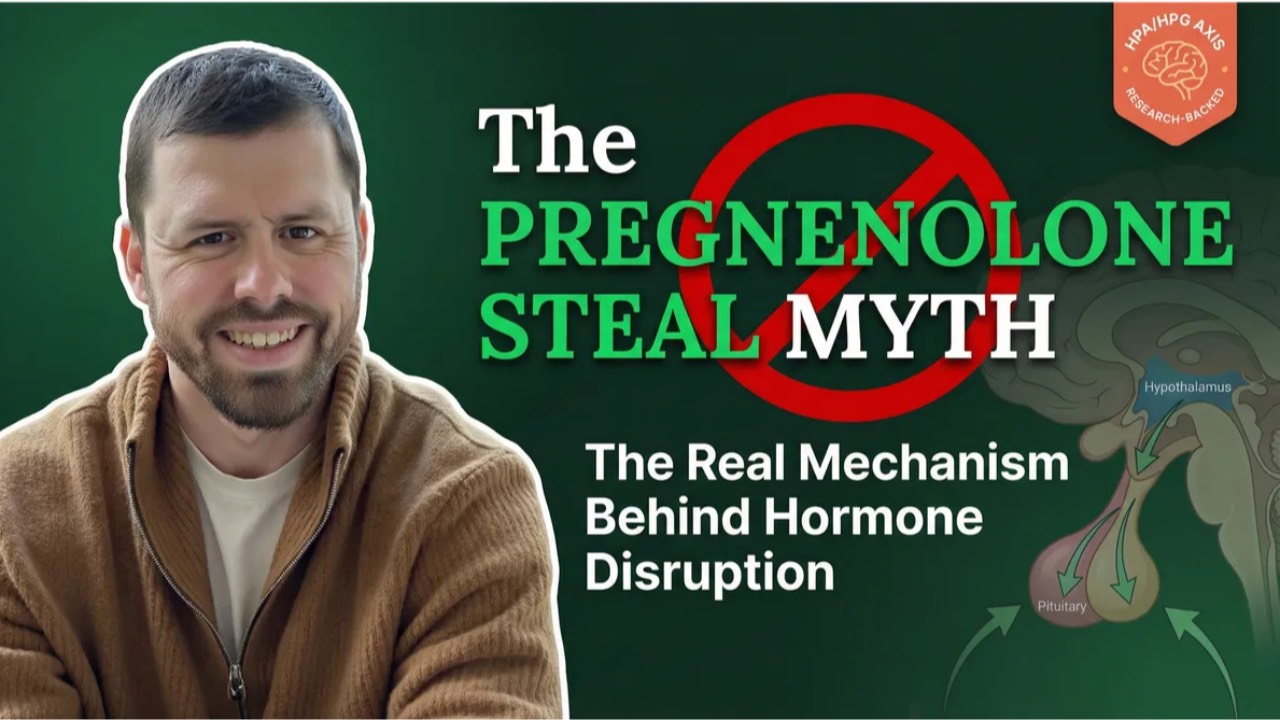
The Pregnenolone Steal Myth: Why This Popular Theory Is Wrong and What's Actually Happening
Wholistic Health Academy • Advanced Hormone Assessment • Clinical Education
The "pregnenolone steal" theory has become deeply embedded in functional medicine education. The concept is appealingly simple: when the body faces chronic stress, the adrenal glands "steal" pregnenolone—the master precursor hormone—away from sex hormone production to meet increased cortisol demands. The result, according to this model, is depleted estrogen, progesterone, and testosterone.
It's taught in courses, repeated in clinical discussions, and used to explain why stressed clients present with hormone dysfunction. There's just one problem: the mechanism doesn't work the way the theory suggests.
Understanding what's actually happening when chronic stress disrupts sex hormone production isn't just academic—it fundamentally changes your assessment approach and intervention strategy. This deep dive explores the real mechanism, how to identify it in lab patterns, and why the correction matters for clinical outcomes.
The Fatal Flaw in the Pregnenolone Steal Theory
The pregnenolone steal model assumes a shared substrate pool. In this view, pregnenolone is a limited resource, and when the adrenals need more for cortisol production, they divert it away from the gonads. The ovaries and testes lose out in a zero-sum competition.
But this isn't how steroid hormone synthesis actually works.
Each steroidogenic organ—the adrenal cortex, the ovaries, the testes—produces its own pregnenolone locally from cholesterol. This conversion happens inside each organ based on the signaling it receives from the hypothalamic-pituitary system. The adrenals don't reach over and take pregnenolone from the ovaries. There is no shared pool to steal from.
The actual relationship between stress and sex hormone production operates through an entirely different mechanism: communication disruption at the brain level.
The Office Supply Analogy
The pregnenolone steal model is like saying your department ran out of paper because accounting took it all. The reality is that management simply stopped ordering paper for your department. The supply chain was redirected at the communication level, not the resource level. Each department has its own supply—management just decides who gets resupplied.
The Actual Mechanism: Hypothalamic-Pituitary Communication
When the brain perceives chronic stress—whether from psychological pressure, under-eating, over-exercising, chronic infection, or toxic exposure—it makes a fundamental survival calculation. The question isn't "how do we allocate pregnenolone?" The question is "should this organism be reproducing right now?"
If the answer is no—if the brain interprets current conditions as threatening to survival—reproductive function becomes expendable. The body won't invest precious resources in creating new life when the existing organism is under threat.
Here's the actual cascade:
Step 1: Chronically elevated cortisol creates negative feedback at the hypothalamus, suppressing GnRH (gonadotropin-releasing hormone) secretion.
Step 2: Reduced GnRH means the pituitary releases less LH (luteinizing hormone) and FSH (follicle-stimulating hormone).
Step 3: Without adequate LH and FSH stimulation, the gonads never receive the signal to ramp up steroidogenesis. They don't convert cholesterol to pregnenolone because they were never asked to.
Step 4: Meanwhile, the HPA axis continues operating. ACTH from the pituitary continues stimulating the adrenals to produce cortisol. The adrenals aren't stealing anything—they're simply continuing to receive their normal (or elevated) signaling while gonadal signaling is suppressed.
This is why we see low sex hormones alongside normal or elevated cortisol. It's not substrate competition—it's differential communication from the brain.
Why the HPA and HPG Axes Are Vulnerable Together
The HPA axis (hypothalamic-pituitary-adrenal) and the HPG axis (hypothalamic-pituitary-gonadal) share two-thirds of their regulatory pathways. Both originate in the hypothalamus and both route through the pituitary. This anatomical overlap means dysfunction in one axis commonly spills into the other.
When chronic stress dysregulates the HPA axis, the shared hypothalamic-pituitary infrastructure often affects HPG signaling as well. This is why adrenal dysfunction and sex hormone dysfunction so frequently co-occur—not because of substrate competition, but because they share regulatory real estate.
The Survival Mode Framework
When the brain perceives chronic stress, it asks a simple question: "Is this person running from a tiger?" If the answer is yes—or if chronic low-grade stress creates that perception—reproduction becomes irrelevant. The body redirects communication away from reproductive function. This isn't pathology; it's adaptive physiology. The system is working exactly as designed.
The Lab Pattern: How to Identify Hypothalamic Suppression
The communication disruption model produces a distinct, recognizable pattern that differs from primary gonadal failure. Knowing this pattern is clinically essential because the treatment implications are completely different.
Hypothalamic Suppression Pattern (Stress-Related):
| Marker | Finding | Interpretation |
|---|---|---|
| LH | Low or low-normal | Brain isn't sending the signal to gonads |
| FSH | Low or low-normal | Confirms pituitary suppression |
| LH:FSH Ratio | ~1:1 (balanced) | Symmetric suppression (not PCOS) |
| Estradiol | Low | No signal = no production |
| Progesterone | Low | No ovulation = no corpus luteum |
| Testosterone | Low | Part of global suppression |
| DHEA-S | Often low or declining | Adrenal reserve depletion |
Contrast with Primary Gonadal Failure:
| Marker | Finding | Interpretation |
|---|---|---|
| LH | High | Brain screaming at unresponsive gonads |
| FSH | High | Amplified signaling, no response |
| Sex Hormones | Low | Gland failure despite adequate signaling |
The key differentiator is LH and FSH. Low pituitary hormones with low sex hormones = brain-level problem (hypothalamic suppression). High pituitary hormones with low sex hormones = gland-level problem (primary failure). Same low sex hormones, completely different mechanism, completely different treatment approach.
The Cortisol-DHEA-S Staging System
Beyond identifying hypothalamic suppression, tracking the cortisol-DHEA-S relationship reveals where your client sits in the stress adaptation continuum. This staging helps guide intervention intensity and provides prognostic information:
| Stage | Cortisol | DHEA-S | Presentation |
|---|---|---|---|
| Early Adaptation | Elevated | Elevated | High-functioning stress, feels "good under pressure" |
| Chronic Stress | Elevated | Low | "Wired and tired," can't relax, sleep disruption |
| Exhaustion | Low | Low | Complete depletion, profound fatigue, crashes |
Clients in the exhaustion stage often show the most severe hypothalamic suppression of sex hormones. They've moved past the compensatory phase entirely.
Case Presentation: The Over-Exercising, Under-Eating Client
The most common population where you'll see this pattern is women combining caloric restriction with intense exercise. These clients are often highly motivated, health-focused individuals who believe they're doing everything right.
Typical presentation:
• Following a 1,200-1,400 calorie diet while exercising intensely most days
• Often low-carb or keto on top of caloric restriction
• Irregular or absent menstrual cycles
• Fatigue despite adequate sleep
• Weight loss resistance (often the reason they're restricting further)
• Hair thinning, cold intolerance, low libido
Lab pattern: Low LH, low FSH, low estrogen, low progesterone, often low DHEA-S. Sometimes accompanied by low-normal or elevated cortisol.
The brain's interpretation: Inadequate food availability + high physical demands = famine conditions. Reproduction must stop.
The Intervention Paradox
These clients don't need hormone replacement therapy. They don't need more supplements. They need to eat more and exercise less. The irony is that they need to "buckle down" on NOT doing so much. When the survival signal resolves—when adequate nutrition is restored and physical stress is reduced—reproductive signaling typically normalizes without direct hormone intervention.
Clinical Implications: Why This Distinction Matters
If you believe the pregnenolone steal model, your intervention strategy might include pregnenolone supplementation, DHEA supplementation, direct sex hormone support, or glandular extracts.
But if the real problem is communication suppression at the hypothalamic-pituitary level, these interventions miss the point entirely. You're providing substrate or end-product when the issue is that the signaling system has been deliberately downregulated.
The actual solution addresses why the brain perceives threat. This means resolving caloric insufficiency (often requires 1,800-2,200+ calories for active women), reducing exercise intensity and frequency, addressing chronic psychological stress, treating underlying chronic illness if present, and supporting blood sugar stability (the foundation of all hormone protocols).
The Five Pillars Framework
This understanding reinforces why we teach the hierarchical approach to hormone assessment. Sex hormones sit at the top of a pyramid, supported by five foundational pillars that must be addressed first. While all five are interconnected, blood sugar stability serves as the anchor point:
• Insulin sensitivity
• Cortisol regulation
• Thyroid function
• DHEA-S adequacy
• Liver function
When these pillars are compromised—especially cortisol and blood sugar regulation—sex hormone dysfunction inevitably follows. Attempting to treat sex hormones directly without addressing these foundations is like trying to fix a roof while ignoring the crumbling pillars holding it up.
This is why we recommend at least six months of foundational work before introducing sex hormone therapy for most premenopausal clients. During this period, hormone requirements change significantly as underlying systems improve. Many clients find their sex hormones normalize entirely without direct intervention.
Takeaways for Clinical Practice
1. Retire the "steal" language. It perpetuates a mechanistic misunderstanding. Use "hypothalamic suppression" or "communication disruption" instead.
2. Always check LH and FSH alongside sex hormones. These upstream markers differentiate brain-level problems from gland-level problems.
3. Stage the stress response using cortisol-DHEA-S patterns. This guides intervention intensity and provides prognostic information.
4. Look for the over-exerciser/under-eater pattern. This is the most common cause of hypothalamic suppression in motivated, health-conscious women.
5. Remember the intervention hierarchy. Blood sugar stability and stress regulation must be addressed before expecting sex hormone protocols to work. You cannot supplement your way out of a signaling problem.
Master Hormone Pattern Recognition
Mastering The Art of Functional Blood Chemistry course provides comprehensive training in identifying and addressing stress-hormone dysfunction patterns, including the five pillars framework and complete assessment protocols.
Learn More About MTAOFBC